body { font-family: 'Helvetica Neue', Helvetica, Arial, sans-serif; line-height: 1.8; color: #333; max-width: 800px; margin: 0 auto; padding: 20px; } h1 { font-size: 2.5rem; color: #1a1a1a; margin-bottom: 10px; line-height: 1.2; } h2 { font-size: 1.8rem; color: #2c3e50; margin-top: 40px; margin-bottom: 20px; border-bottom: 2px solid #eaeaea; padding-bottom: 10px; } h3 { font-size: 1.4rem; color: #444; margin-top: 30px; margin-bottom: 15px; } p { margin-bottom: 20px; font-size: 1.1rem; } ul { margin-bottom: 20px; padding-left: 20px; } li { margin-bottom: 10px; font-size: 1.05rem; } blockquote { border-left: 5px solid #007bff; margin: 30px 0; padding: 20px; background-color: #f9f9f9; font-style: italic; font-size: 1.2rem; color: #555; } .meta-info { font-size: 0.9rem; color: #666; margin-bottom: 30px; border-top: 1px solid #eee; border-bottom: 1px solid #eee; padding: 10px 0; } .highlight { background-color: #fff3cd; padding: 2px 4px; border-radius: 4px; } .timeline-item { margin-bottom: 15px; } strong { color: #000; }
The Greenland Crisis: Inside the U.S. Ultimatum & Global Fallout
Date: January 14, 2026 | Category: Geopolitics / Deep Dive
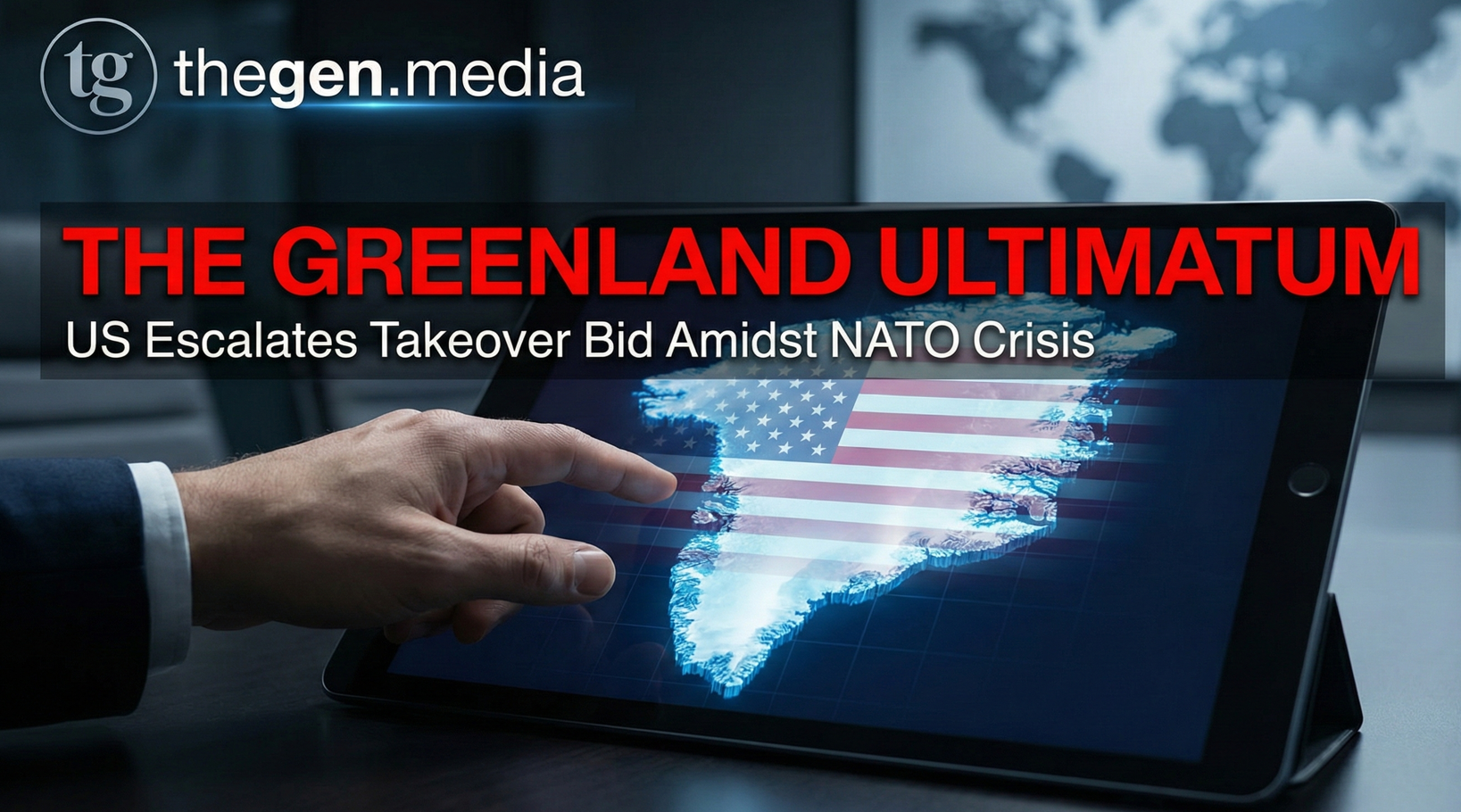
In early January 2026, the geopolitical landscape shifted dramatically. Newly re-elected U.S. President Donald Trump escalated his long-standing interest in Greenland from a "real estate deal" to an urgent national security ultimatum. Reports indicate he is eyeing a takeover within "weeks or months," explicitly refusing to rule out the use of military force if a purchase cannot be negotiated.
This development has triggered a diplomatic crisis between the U.S., Denmark, and NATO. Below is the full breakdown of the incident, the historical context, and the geopolitical reasons driving this move.
1. The "Newly Happened Incident" (January 2026)
The situation shifted from diplomatic rhetoric to an existential threat for NATO in the first two weeks of January 2026.
The Ultimatum
President Trump reportedly told advisors and public audiences that the U.S. must control Greenland to prevent China or Russia from gaining a foothold.
"If we don't take Greenland, Russia or China will take Greenland, and I am not going to let that happen."
"The Hard Way"
Breaking with diplomatic norms, the White House stated that "utilizing the U.S. military is always an option" if Denmark refuses to sell. Trump was quoted saying: "If we don't do it the easy way, we're going to do it the hard way."
The Global Reaction
- Greenland: Prime Minister Jens-Frederik Nielsen and other leaders issued a joint statement: "We choose Denmark." They clarified, "We don't want to be Americans... we want to be Greenlanders."
- Denmark: Prime Minister Mette Frederiksen called this a "decisive moment," warning that any U.S. military move on a NATO ally would effectively dissolve the alliance.
- Europe: European leaders are scrambling, with some EU diplomats stating they must be "ready for a direct confrontation" to protect Danish sovereignty.
2. The Voice of Greenland: "We Choose Denmark"
In the face of the U.S. ultimatum, the response from Nuuk has been defiant and unified. While global media focused on the clash between Washington and Copenhagen, the most critical voice belongs to Jens-Frederik Nielsen, the Premier of Greenland.
On January 13, 2026, just hours before high-stakes talks were set to begin at the White House, Prime Minister Nielsen delivered the most significant statement of the crisis:
"We are now facing a geopolitical crisis. If we have to choose between the US and Denmark here and now, we choose Denmark, NATO, and the EU."
This statement shattered the U.S. assumption that Greenlanders might be swayed by economic promises. Earlier, Nielsen issued a rare joint statement signed by the leaders of all five major Greenlandic political parties, explicitly rejecting the "wealth and protection" offer:
"We don't want to be Americans, we don't want to be Danes, we want to be Greenlanders. The future of Greenland must be decided by Greenlanders."
3. The Full Story: A Century of U.S. Ambition
While the threat of force is new, the U.S. desire to own Greenland is over 150 years old.
1867 (The First Spark): The U.S. State Department commissioned a report on buying Greenland and Iceland. It concluded Greenland possessed valuable resources, but no offer was made.
1910: The U.S. considered trading its Philippine territories for Greenland, but the idea never materialized.
1946 (The Cold War Offer): President Harry Truman secretly offered Denmark $100 million in gold for the island. Denmark refused but allowed the U.S. to build the massive Thule Air Base.
2019 (The Trial Balloon): During his first term, President Trump floated the idea of buying Greenland. It was dismissed as "absurd" by Denmark, leading to a cancelled state visit.
2026 (The Escalation): No longer asking, the administration is now demanding control, framing it as an urgent security necessity.
4. Geopolitical Perspective: Why Greenland? Why Now?
The U.S. interest is not about "real estate" in the traditional sense. It is about three critical geopolitical assets: The Arctic, Rare Earths, and The GIUK Gap.
A. The Treasure Trove: Rare Earth Minerals
Greenland holds some of the world's largest undeveloped deposits of Rare Earth Elements (REEs)—minerals essential for fighter jets, EVs, and smartphones. Control of sites like Tanbreez and Kvanefjeld would break China's monopoly on the global supply chain.
B. The "High Ground" of the Arctic
As ice melts, the Arctic is becoming a "new ocean." While Russia militarizes its coast and China builds a "Polar Silk Road," the U.S. strategy relies on owning Greenland to secure total dominance over the North American Arctic.
C. The GIUK Gap & Missile Defense
Greenland is critical for the GIUK Gap, a naval choke point for Russian submarines. Furthermore, Pituffik Space Base (Thule) houses critical radar systems for nuclear early warning. The U.S. fears an independent Greenland could be swayed by foreign investment, compromising this defense network.
Summary: The Danger to the Global Order
The U.S. views Greenland as an unsinkable aircraft carrier filled with essential minerals. However, the "newly happened incident" introduces coercion into the equation.
By threatening to treat a NATO ally like a hostile state, the U.S. is testing the limits of the post-WWII international order. If forced to choose, Europe may have to decide between its sovereignty and its security guarantor.