The 70-Year Eviction /* Adaptive Color Theme */ :root { --text-color: #1a1a1a; --bg-color: #ffffff; --accent-color: #B71C1C; /* Editorial Red */ --meta-color: #666666; --quote-border: #000000; --card-bg: #f5f5f5; --link-color: #0056b3; } @media (prefers-color-scheme: dark) { :root { --text-color: #e0e0e0; --bg-color: #121212; --accent-color: #ff6b6b; --meta-color: #a0a0a0; --quote-border: #ffffff; --card-bg: #1e1e1e; --link-color: #64b5f6; } } body { background-color: var(--bg-color); color: var(--text-color); margin: 0; padding: 20px; font-family: 'Georgia', serif; /* Editorial feel */ } article { line-height: 1.8; max-width: 750px; margin: 0 auto; } h1 { font-family: -apple-system, BlinkMacSystemFont, "Segoe UI", Roboto, sans-serif; margin-bottom: 0.5rem; letter-spacing: -0.03em; font-size: 2.5rem; line-height: 1.1; } .subtitle { font-family: -apple-system, BlinkMacSystemFont, "Segoe UI", Roboto, sans-serif; font-size: 1.2rem; color: var(--meta-color); font-weight: 400; margin-bottom: 1.5rem; } .dateline { font-family: monospace; font-size: 0.85rem; text-transform: uppercase; color: var(--accent-color); font-weight: bold; display: block; margin-bottom: 2rem; border-bottom: 1px solid var(--meta-color); padding-bottom: 10px; } h3 { font-family: -apple-system, BlinkMacSystemFont, "Segoe UI", Roboto, sans-serif; margin-top: 2.5rem; font-size: 1.4rem; } .fact-box { background-color: var(--card-bg); border-left: 4px solid var(--accent-color); padding: 1.5rem; margin: 2rem 0; border-radius: 4px; font-family: -apple-system, BlinkMacSystemFont, "Segoe UI", Roboto, sans-serif; font-size: 0.95rem; } .fact-box strong { color: var(--accent-color); } blockquote { font-style: italic; border-left: 2px solid var(--meta-color); margin: 1.5rem 0; padding-left: 1.5rem; color: var(--meta-color); }
The 70-Year Standoff: Supreme Court Closes the Door on "Hostile Tenants"
In the matter of Jyoti Sharma vs. Vishnu Goyal, the Apex Court has clarified that a tenant’s long-term possession can never mature into ownership, ending a dispute that began in 1953.
New Delhi | January 7, 2026
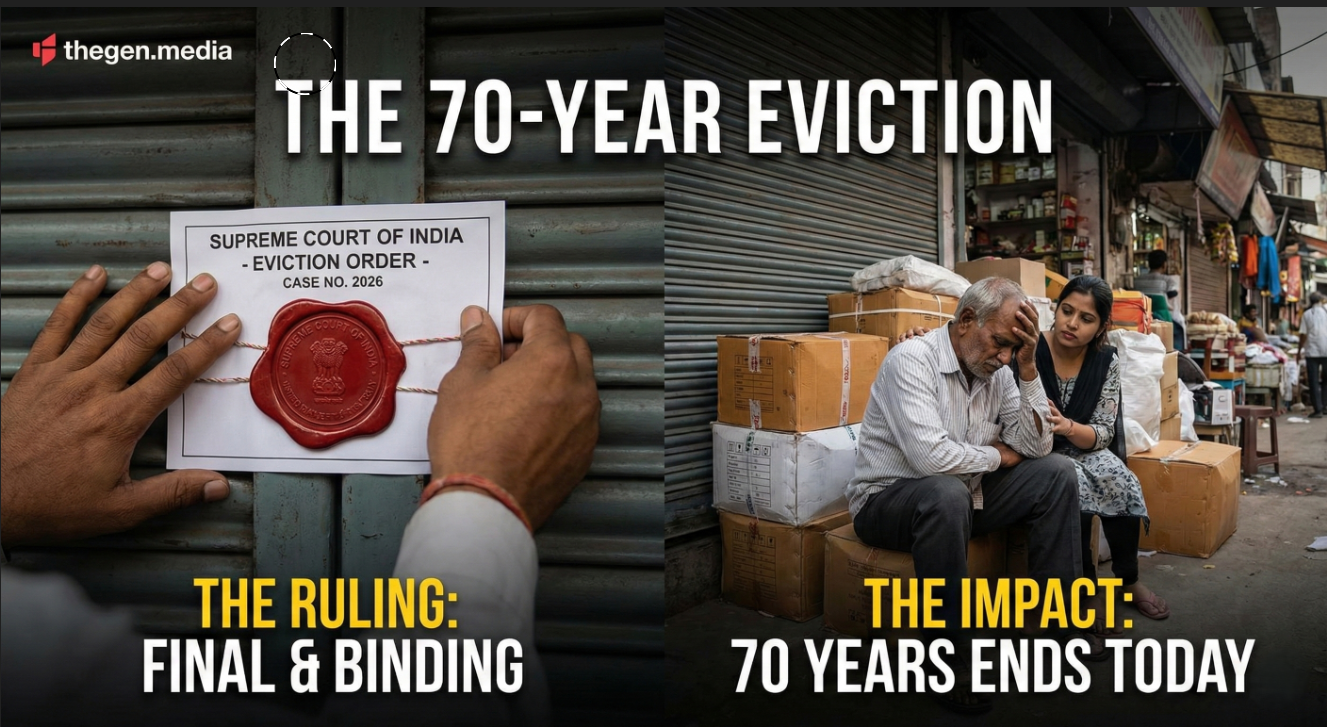
A legal saga that spanned the terms of 15 Prime Ministers has finally concluded. In a judgment that is reshaping landlord-tenant relations across India this week, the Supreme Court has ordered the eviction of a tenant family that had occupied a shop in Madhya Pradesh for over 70 years, categorically rejecting their claim to ownership via "Adverse Possession."
The ruling, delivered by a bench comprising Justice J.K. Maheshwari and Justice K. Vinod Chandran, addresses a critical anxiety in the Indian real estate market: the fear that a tenant who stays "too long" can legally hijack a property.
The Facts of the Case
CASE FILE: Jyoti Sharma vs. Vishnu Goyal
- Origin: The tenancy began in 1953, when the original owner (Ramji Das) rented a shop to the tenant (Kishan Lal).
- The Conflict: After Ramji Das died in 1999, his daughter-in-law, Jyoti Sharma, inherited the property via a Will.
- The Breach: The tenant’s heirs (the Goyal family) stopped paying rent in 2000. When asked to vacate, they claimed they were now the owners because they had lived there for decades and the original owner’s title was "defective."
- Lower Courts: Shockingly, the Trial Court and High Court had initially dismissed the landlady's plea, citing "suspicion" over the Will.
The Supreme Court's Observation
The Supreme Court overturned the concurrent findings of the lower courts, terming them "perverse" and based on "mere surmises." The Bench laid down three factual precedents that are legally binding as of 2026:
1. The Doctrine of Estoppel (Section 116):
The Court invoked Section 116 of the Indian Evidence Act. It ruled that if a tenant enters a property by paying rent, they are estopped (legally barred) from ever challenging the landlord's title. The fact that the Goyal family paid rent from 1953 to 2000 was sufficient proof that they acknowledged Ramji Das as the owner. You cannot pay rent for 47 years and then suddenly claim the landlord isn't the owner.
2. Adverse Possession Denied:
The tenants argued that their long, uninterrupted stay gave them rights. The Court rejected this, stating:
"A tenant occupies the property only with the permission of the owner; therefore, the rule of adverse possession does not apply. The possession is permissive, not hostile."
3. The Validity of the Will:
The lower courts had questioned the Will because the original owner did not leave any property to his wife, only to his daughter-in-law. The Supreme Court dismissed this moral policing, stating that a testator has the absolute right to bequeath property to whomever they choose, and courts cannot impose their own "naturalness" on a family's internal decisions.
The Verdict
The Supreme Court has issued a definitive order:
- The tenants (Vishnu Goyal & Anr) must pay all rent arrears calculated from January 2000 to the present day.
- They have been granted a compassionate window of six months to vacate the premises, subject to filing an undertaking within two weeks.
- Failure to file this undertaking will result in immediate summary eviction.
Why This Matters Today
For the Indian "Gen Z" landlord or inheritor, this judgment removes the primary barrier to monetization. Thousands of properties in Tier-1 and Tier-2 cities sit vacant because owners fear the "forever tenant." This judgment provides the factual legal backing to rent out these assets without the risk of losing the title, potentially unlocking significant inventory in the 2026 housing market.